
Skip to the main content.

2 min read

The Password Paradox: Why Your "Strong" Password Might Not Be Enough

The Password Paradox: Why Your

As we come to the end of Cybersecurity Awareness Month, it's time to confront an uncomfortable truth: passwords, our primary digital gatekeepers for decades, are failing us. Despite being fundamental to cybersecurity, they're increasingly becoming our biggest vulnerability.

The Problem with Passwords

Traditional passwords suffer from a fundamental flaw: they force us humans to choose between security and convenience (and here's a hint: humans prefer convenience). The more secure a password is, the harder it becomes to remember. This creates a "password paradox" where:

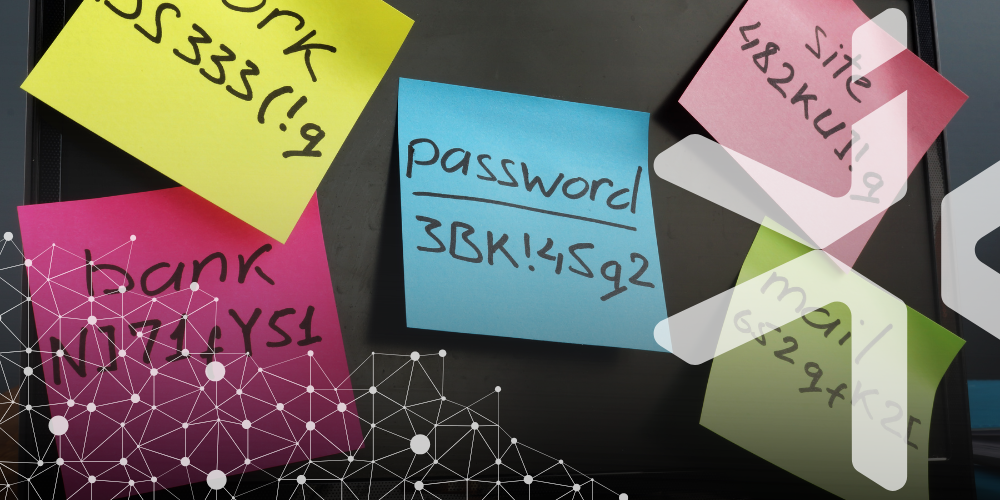
  • Complex passwords are difficult to remember, leading to risky behaviours like reusing passwords or writing them down
  • Simple passwords are easy to crack using modern computing power; quantum or not
  • Even "strong" passwords can be compromised through data breaches, phishing, or social engineering

The Real Cost to Organisations

The impact of weak password practices on organisations is staggering:

  • According to Verizon's 2024 Data Breach Investigations Report, nearly 25% of all breaches were caused by attackers using stolen or compromised passwords to gain unauthorised access.
  • The global average cost of a data breach in 2024 is US$4.88 million, an increase from US$4.45 million in 2023
  • Employee productivity suffers from password reset requests and lockouts
  • Reputation damage from breaches can have lasting effects on customer trust

Current Best Practices

While we work toward a passwordless future, here are the current recommended best practices from the US National Institute of Standards and Technology (NIST):

Password Length Over Complexity

  • Use passwords of at least 15 characters
  • Focus on length rather than special characters
  • Make them memorable but not guessable
  • Support the use of all ASCII characters and even Unicode to allows for more flexibility and stronger password creation

Don't force constant Password changes

  • NIST now recommends that people only change their passwords if there was evidence of a breach
  • Don't offer password hints that might give hackers a clue

Unique Passwords for Every Account

  • Never reuse passwords across multiple accounts
  • Use a password manager to generate and store unique passwords
  • Regularly audit and update critical passwords

Multi-Factor Authentication (MFA)

  • Enable MFA wherever possible
  • Prefer authenticator apps over SMS-based verification
  • Consider hardware security keys for critical systems

Password Management Solutions

  • Implement enterprise password managers
  • Use single sign-on (SSO) where appropriate
  • Regular password audits and compliance checks

The Future of Authentication

The future of authentication is likely to be passwordless, with several promising technologies emerging:

Zero-Trust Architecture

  • Continuous authentication rather than one-time login
  • Risk-based authentication decisions
  • Adaptive security measures based on context

Biometric Authentication

  • While fingerprint and facial recognition has been around for some time, it is becoming widely adopted, particularly in smartphones
  • Behavioural biometrics analysing typing patterns and gestures
  • Multi-modal biometric systems combining multiple factors

Token-Based Systems

  • Hardware security keys
  • Mobile device-based authentication
  • Blockchain-based identity verification

Practical Steps Organisations Can Take Today

Audit Current Password Practices

  • Review password policies
  • Identify vulnerable accounts
  • Assess compliance with current standards

Implement Modern Solutions

  • Deploy enterprise password managers
  • Enable MFA across all systems
  • Consider passwordless options where feasible

Train and Educate

Conclusion

While passwords aren't disappearing overnight, organisations need to recognise their limitations and prepare for a passwordless future. The key is finding the right balance between security and convenience while staying ahead of evolving threats.

Every organisation should aim to transition away from passwords towards forms of authentication that better resist phishing. This involves implementing SSO and MFA for sensitive applications and ultimately replacing passwords with passkeys. Organisations that adapt early will be better positioned to protect their assets and maintain customer trust in an increasingly complex digital landscape.

Remember: Cybersecurity is only as strong as its weakest link. Don't let that link be a password.

Another Day, Another Breach: The Relentless Pace of Cyber Incidents

Another Day, Another Breach: The Relentless Pace of Cyber Incidents

Sixteen Days In: A Sobering Start to the Year When an Insicon Cyber team member shared news of the Victorian Department of Education breach with the...

Read More
Healthcare Cyber Security 2026: Trans-Tasman Lessons | Insicon Cyber

Healthcare Cyber Security 2026: Trans-Tasman Lessons | Insicon Cyber

The recent cyber security incident affecting New Zealand's ManageMyHealth platform serves as a critical reminder that healthcare organisations across...

Read More
Cyber Security Predictions for 2026

Cyber Security Predictions for 2026

When we speak with Australian and New Zealand CEOs about cyber security today, the conversation has fundamentally shifted. We're no longer discussing...

Read More
Beyond the Morning Headlines: A Practical Path Forward

Beyond the Morning Headlines: A Practical Path Forward

If you've caught up on cybersecurity news this Monday morning, you might be forgiven for thinking the digital world is spinning out of control....

Read More
Healthcare Under Siege: Why Managed Security Services Are Essential Against Growing Cyber Threats

Healthcare Under Siege: Why Managed Security Services Are Essential Against Growing Cyber Threats

The cyber threat landscape for healthcare continues to deteriorate, with the Data Breach Notification of the 2024 attack on McLaren Health Care...

Read More
The Optus Privacy Ruling: What Every Australian Board Should Now Know

3 min read

The Optus Privacy Ruling: What Every Australian Board Should Now Know

The Office of the Australian Information Commissioner's civil penalty action against Optus isn't just another regulatory slap on the wrist, it's a...

Read More